10 Ways to Build Fall Memories & Traditions in Split Families

Parenting after separation comes with unique challenges. When time with your child is shared, it’s easy to feel like you’re missing out or competing with traditions at the other home. But here’s the truth: your child doesn’t need two identical sets of rituals — they need yours. The ones you create together, even in small, intentional ways.

Here are 10 ways to start building memories and traditions with your kids when time is split:

1. Apple Picking Your Way

Even if your child has already gone with their other parent, make the trip yours. Pick one apple together that you eat right in the orchard — juice dripping, reveling in the taste, no rules.

2. Pumpkin Carving Ritual

Let them choose the design (no matter how wild) and carve it together. The mess, the laughter, the candle glowing at night — that’s the memory.

3. Halloween Sidekick

Let them lead on costumes and take the supporting role. It shows you’re invested in their imagination and not just directing the fun.

4. Seasonal Hike Journal

Bring a notebook and jot down what you see, hear, and smell on a Fall hike. Over the years, you’ll create a family nature log that belongs to just you two.

5. Leaf Peeping Drive

Pick a Saturday, make a playlist, and drive the back roads just to admire the colors. Add cider stops along the way.

6. Night Walks

When the stars come out earlier, go for a short walk together. Teach them to notice the stillness — or just use it as time to talk without screens.

7. Volunteer Together

On Thanksgiving, serve at a food pantry or community dinner. Gratitude grows deeper when practiced, not just spoken.

8. Small Rituals at Home

Hot cider after raking leaves, Sunday pancakes with too much syrup, or reading by candlelight — it doesn’t have to be big to be lasting.

9. Shared Creation

Make something every Fall: a scarecrow, a silly Fall playlist, or even a pumpkin bread recipe that becomes your thing.

10. Let Them Co-Create

Ask your child: What traditions do you want us to have? Ownership makes the ritual even stronger — it’s not just yours handed down, it’s built together.


🍁 Final Thought

Split schedules don’t mean split love. They mean more opportunities to be intentional, more chances to show up, and more ways to build memories that stick.

#Parenting,  #Fatherhood,  #DadLife, #SingleParenting,  #CoParenting, #FamilyTraditions, #FallVibes, #AutumnVibes, #FallFeels, #CreatingMemories

Roots Before Wings: Helping Our Kids Build Resilience That Lasts a Lifetime

By A Mindful Dad’s Life


The Quiet Lessons We Teach on Calm Days

Resilience isn’t built in the storm. It’s built on sunny days, in small, quiet moments when life feels easy and our kids feel safe.

Picture this: your child sits at the kitchen table stacking blocks, their tongue peeking out in deep concentration. The tower wobbles. It crashes. For a second, their eyes well up, frustration rising fast. And here’s the moment that matters: do we swoop in to rebuild the tower, or do we teach them how to take a breath and try again?

These everyday moments, when the stakes are low and the world feels safe, are where we lay the foundation for how our children handle life when it gets messy. The roots we plant today will help them to grow the wings they need tomorrow.


Why Resilience Matters

Life won’t always be kind to our kids. They’ll lose friends, miss shots, fail tests, get their hearts broken, and face disappointments we can’t shield them from.

We can’t promise to protect them from every storm, but we can teach them how to stand in the wind and the rain without breaking.

Resilience is more than “bouncing back.” It’s helping our kids understand what’s important, how to process their emotions, and take action even when life feels overwhelming. And the time to start isn’t when things are hard. It’s right now, when things are good.


1. Teach Perspective Before the Storm

Kids live in the moment, which can make small setbacks feel enormous. One of the greatest gifts we can give them is the ability to zoom out, to see that challenges are temporary and failures are part of growth.

  • Share your own stories of struggle and recovery. Let them hear how you failed, got frustrated, and figured it out anyway.
  • Use simple language: “This feels big now, but one day it won’t. You’ll get through this.”
  • Help them separate who they are from what happened. Missing a shot doesn’t mean they’re a bad athlete. Failing a test doesn’t mean they’re not smart.

Resilient kids see failure as information, not identity.


2. Help Them Name Their Feelings

Resilience isn’t about “toughening up”, it’s about emotional awareness. When kids can name what they’re feeling, they can manage it instead of being overwhelmed by it.

  • When your child is upset, ask, “What are you feeling right now?”
  • Validate their emotions instead of rushing to fix them: “I understand why you’re frustrated. That makes sense.”
  • Teach that feelings come and go like the weather. Sadness, anger, fear, none of them last forever.

When kids know that emotions are natural and temporary, they gain the confidence to work through them instead of avoiding them.


3. Celebrate Effort, Not Just Results

Resilience grows when kids learn that their worth isn’t tied to winning. By focusing on effort over outcome, we give them permission to keep trying even when things don’t work out.

  • Praise the process: “I’m proud of how hard you worked,” not just “I’m proud you won.”
  • Give them challenges slightly outside their comfort zone: fixing a toy, planning a family activity, or helping cook dinner.
  • When they succeed, focus on what they learned and how they felt along the way, not just the finish line.

Effort builds grit. Grit builds confidence. Confidence builds resilience.


4. Model What Moving Forward Looks Like

Our kids learn more from watching us than from listening to us. When we handle setbacks with patience, self-compassion, and problem-solving, we’re showing them the blueprint for resilience.

  • Talk out loud about your own challenges and how you approach them.
  • Admit when you make mistakes, and let them see you try again.
  • Show them that it’s okay to ask for help.

Resilience isn’t pretending to have it all together. It’s showing up, learning, and moving forward, even when it’s hard.


When the Hard Days Come

There will be moments when your child faces something you can’t fix. A friendship ends. A dream slips away. A door closes.

That’s when your groundwork matters most.

Because if they’ve practiced naming their feelings, shifting their perspective, and trusting their own ability to recover, they’ll already know what to do: breathe, feel, think, act.

And maybe they’ll even remember something you said in a quiet kitchen years ago:
“This hurts now. But you’re stronger than you think. And this is not the end of your story.”

And maybe in that moment, they’ll remember something you told them, and something you lived through. Because resilience isn’t just something we teach; it’s something we’ve had to earn ourselves.

Take time to share those moments with your child: the times you struggled, the times you stumbled, and the times you kept going. Let them hear how perspective, emotional honesty, and persistence helped you move forward. When they see that these lessons mattered in your life, they’ll carry them forward in their own.


Roots Before Wings

We give our kids roots: belonging, love, security. But we also give them wings: courage, grit, confidence, and hope.

One day, they’ll face a storm you can’t stand in for them. And they’ll rise, not because life got easier, but because you helped them practice being strong when life was calm.

Resilience isn’t built in the storm. It’s built in the sun. And it starts with us.

If this resonated with you, start today: notice the small moments, speak kindly through the little frustrations, and talk with your child about how they feel, even when everything’s going fine. Resilience begins when we choose to be present, not perfect.

What I Learned About Co-Parenting the Afternoon Everything Went Sideways

Some days co-parenting feels like walking a tightrope: balancing my son’s joy, his mom’s expectations, and my own mistakes. This was one of those days.

My son is stubborn. When he gets something in his head, there’s no changing it. It’s part of what makes him strong, but it’s also something we’re working on together: being more mentally flexible and learning to let others lead sometimes. That stubborn streak shaped how this afternoon went.

He’s been that way since the day he was born. During labor, the midwife determined that he was holding onto his umbilical cord. Every time there was a contraction, he’d tighten his grip until his heart rate dropped low enough for him to pass out. Then he’d release it, his heart rate would recover, and the cycle would start again. After many tense hours, they opted for a C-section. When I placed him on his mother’s chest afterward, the attending nurse watched him snuggle in, bump his body around to get comfortable, and said, “He likes what he likes. I can see that in him.” It was the first clear sign that our son was stubborn and wanted what he wanted.

It started simple enough. His birthday was tomorrow, and he’d been milking the “birthday week” for all it was worth. When I picked him up from camp, his mother texted asking if I had plans for him. I didn’t. She said she wanted to head to the Y at five to meet a friend and let our kids swim together. Sounded good to me, I’d even get a swim in myself.

When I told him we were going home so he could swim with his friend, he shook his head. “I don’t want to swim. But can we get a Holy Donut for my birthday?”

It was 3:38. We had time. But when we got to the Holy Donut, it was closed.

No problem, I thought. But he wasn’t giving up on birthday week treats. “What about Ben & Jerry’s?” he asked. I said no, no ice cream before dinner. But I offered a deal: we’d stop at Whole Foods, grab some cones, and get ice cream there, and he could eat it after dinner.

So we did. We picked up jerky for a snack, popcorn for later, and his ice cream. Then we headed home.

Ten minutes from the house, traffic came to a sudden stop on the highway. A mess of brake lights. We narrowly avoided a big accident. My son yelled from the back seat, “We almost got into an accident!” just as my phone buzzed.

It was his mom. “What’s taking so long?” she asked.

“We’ll be home in a few minutes, before five,” I said.

She sighed. “It’s not worth going to the Y now. I thought you’d be home sooner.”

By the time we got home, I told my son, “Go talk to your mom, maybe she still wants to go.”

But he shook his head. “I don’t want to go to the Y.”

Inside, he disappeared into his room, while his mom sat working on her laptop. A minute later, he burst back out, shoving me toward the door. “We’re doing a water gun fight,” he announced.

I laughed and told him I needed to change first, and make a quick work call in my car.

That’s when it happened.

As I walked through the house to change, his mother stood up from the couch, looked at me, and loudly whispered:

“You are such an asshole. I hate you.”

She walked away before I could respond, leaving me standing there stunned and frustrated, caught between wanting to defend myself and knowing it would only escalate things.

I changed, went to the car, and started my call. She came outside, made sure I saw her, leaned toward my window, scowled, and flipped me off before walking into the greenhouse.

My son climbed into the car a few minutes later. “Mom’s in the greenhouse,” he said. And then, as if nothing had happened, he grinned: “Ready for the water gun fight?”

We spent the next hour laughing, running through the yard, spraying each other until we were soaked. He finished the evening sitting under the outdoor shower, talking quietly to himself and playing with the water for 45 minutes.

When I finally went inside, his mother confronted me again. “You’re completely inconsiderate,” she said. “I shouldn’t let myself be surprised or angry—you just do whatever you want.”

I stayed calm. “I thought I was home in time for you to go to the Y. But you’re right—I should have texted you from the highway. That’s on me. I’ll communicate better next time.”

She rolled her eyes. “Whatever. It doesn’t matter anymore.”


Three Sides to Every Story

I’ve always believed there are three sides to every story. Like a coin, there’s Heads and Tails—two people’s versions of what happened—and then there’s the truth, which lives in the edge between them.

The truth here is that I was late. I should have texted. I could have been clearer about how long we’d be. That’s my side of the coin.

Her side? It isn’t really about being late. She’s been hurt before—deeply. She had a kid with a man who wouldn’t show up for days, didn’t communicate, and even taught his son to lie to her. That kind of betrayal leaves scars. So when I don’t text, it doesn’t just feel like poor communication—it feels like old wounds reopening.

And then there’s the edge of the coin—the part I have to live on for my son’s sake.

Because he doesn’t need whispered hate in the living room. He needs laughter in the yard—the kind we shared as we darted between trees, soaked from head to toe, his belly-laugh echoing louder than the spray of the water guns. He needs parents who can own their mistakes, even when it’s uncomfortable. He needs a father who stays calm when things get messy.


What I Learned

Co-parenting isn’t about winning arguments. It’s about breaking old cycles, even ones you didn’t create. And yes, I certainly had my part in why we are no longer together. I’ve made mistakes, learned from them, and am doing the work to grow past those old wounds and cycles.

For me, that means apologizing when I’m wrong, even if I’m frustrated. It means remembering that her anger isn’t really about me; sometimes it’s about a past I didn’t live, but still have to navigate. And, most importantly, it means choosing to focus on the moments that matter: the water gun fight, the outdoor shower, and the little boy who, for 45 minutes, was perfectly happy just being a kid.

That’s the story he’ll remember. And that’s the story I want to keep writing.

Your Kids Will Test You — And That’s a Good Thing

By: A Mindful Dad’s Life

The first time my son really tested me, it caught me off guard. We were mid-conversation about something small (cleaning up his Legos, I think) and out of nowhere, he looked me right in the eye and said, “I don’t care.”

I knew in that moment he didn’t want to pick up the Legos, that much was clear. But it wasn’t really about the Legos. It was about me.

And for a split second, I felt that familiar adult urge: shut it down, take control, remind him who’s in charge.

But I caught myself.


Because this wasn’t defiance for the sake of defiance. This was a question in disguise:
“Are you still my safe place when I’m not easy to love?”

The Hidden Purpose of These “Tests”

Kids can’t always explain their feelings, so they push them outward. Sometimes that looks like talking back, breaking a rule, or going silent when you try to talk.

Underneath it all, they’re looking for answers to questions they don’t have the words for yet:

If I mess up, will you still show up for me?

Do you hear me when I’m struggling, or only when I’m well-behaved?

Can I trust you with the real me, even if the real me is messy right now?

The Reflex We All Have: And Why It Doesn’t Work

As parents, it’s easy to react from habit:

“Don’t talk to me like that.”

“Go to your room.”

“Because I said so.”

Those responses might stop the behavior for the moment, but they don’t answer the deeper question. In fact, they can teach the opposite: I’m only loved when I’m easy.

Over time, that pushes kids to hide their feelings, avoid honesty, and pull away when life gets hard. It also limits their ability to become a safe place for others. This can be especially challenging for boys, who may grow into men without learning emotional security or how to relate to others with empathy.

Meeting the Test Without Losing Yourself

This isn’t about letting your kid run wild. It’s about staying steady enough to guide them through the storm instead of joining it.

  1. Slow your reaction, here is where I usually take a breath. Pause before you speak. Remind yourself that connection comes before correction.
  • Get curious. Ask, “What’s really going on here?” Sometimes the anger is about something that happened hours ago, or about something unrelated to you.
  • Hold the boundary, keep the bridge. It’s okay to say, “I love you, but it’s not okay to yell at me.” Boundaries create safety when they’re delivered with respect.
  • Circle back. The real conversation often happens later, when the heat’s gone. Use that time to reconnect and help them name what they were feeling.

Why It Matters More Than You Think

Every time you pass one of these tests, you’re teaching your child:

  1. They can bring their whole self to you.
  • You can handle their big emotions without shutting them down.
  • Love in this family doesn’t vanish when things get hard.

That’s the kind of foundation they’ll carry into every friendship, relationship, and challenge for the rest of their life.

In the end, the test isn’t about you “passing” or “failing.” It’s about showing your child that when life gets messy, and it will, you’ll still be there for them.


Your Turn: Think about the last time your child “tested” you. How did you respond? What could you do differently next time to show them you’re a safe place, even when emotions run high? Share your thoughts with other parents, or start the conversation at your next family meal. The more we talk about this, the more we grow together.

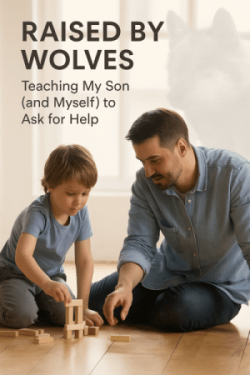
Raised by Wolves – Teaching My Son (and Myself) to Ask for Help

By The Mindful Dad Life.

This story is part 2 of a series of posts that need to be written, both for my own reflections and to help me understand what kind of dad I want to be.

I started noticing it when my son was about four or five. He’d be sitting on the floor with his blocks, or drawing something he’d never tried before, and I could see him struggling—jaw tight, shoulders stiff, refusing to look my way. He wouldn’t ask for help.

And I recognized it instantly, because I was looking at myself.

I’ve spent most of my life with that same instinct, the one that whispers, figure it out yourself, don’t bother anyone, don’t show weakness. I never taught him that, not intentionally, but kids don’t just learn what we say; they pick up who we are. In a lot of ways, we pass on survival habits without even meaning to. Raised by wolves, indeed.

It took weeks “Weeks” of patient conversations to help him get comfortable asking. I’d sit beside him and say, “What can you figure out, and what can I help you with?” or “If you need help, remember, I’m right here.” At first, he’d shake his head and try harder on his own. But slowly, he started asking. Just once in a while at first, then with a little more ease.

And every time he asked, it felt like a small victory, not just for him, but for both of us.

Because if I’m being honest, I’m still learning this myself.

The Freeze

Not long ago, a friend of mine—someone I’d just helped with his art business plan and a new logo he’d been wanting for years—looked me straight in the eye and said, “Anything you need, man, just ask.”

I froze.

My mind went completely blank. Not because I didn’t need help, but because my brain didn’t know how to process that offer. I didn’t know what to say. And that’s when it hit me: this isn’t just habit, it’s wiring.

Why Men Struggle to Ask for Help

Science backs that up. Studies have shown that men are less likely than women to seek help, not just emotionally but practically, whether it’s asking for directions, reaching out for mental health support, or delegating tasks.

Some of this comes from how boys are socialized. Research published in Psychology of Men & Masculinities found that from a young age, boys are more likely to be praised for independence and problem-solving, while girls are encouraged to seek and offer help. By the time we’re adults, those patterns are deeply ingrained.

There’s also biology at play. A 2019 review in Frontiers in Behavioral Neuroscience discussed how testosterone and stress responses interact, often making men more likely to respond to challenges with a “fight-or-flight” reaction rather than a “tend-and-befriend” one, a pattern more common in women. In other words, when something’s hard, our instinct isn’t to ask for help; it’s to grit our teeth and push harder.

That instinct kept our ancestors alive. But for fathers, for men trying to raise kids in a healthier, more connected world, it can hold us back.

The New Pack

I don’t want to raise my son to be a lone wolf. I want him to know that asking for help isn’t weakness, it’s trust. It’s connection. It’s how we build stronger families, stronger friendships, stronger lives.

The truth is, we’re not meant to do it all alone. Wolves survive in packs for a reason.

So I’m trying to rewrite this for myself as much as for him. I’m practicing saying yes when someone offers to help, even if it feels awkward. I’m practicing asking for help before things reach the breaking point. And every time my son looks up and says, “Dad, can you help me with this?” I remind myself: this is what breaking the cycle looks like.

If I can teach him that strength isn’t just doing everything alone, then maybe that’s the legacy that matters most.


For Dads Reading This

If you’re like me, you probably freeze up too. Maybe you think you need to handle everything, to be the strong one all the time. But the strongest thing you can teach your kids is that strength also looks like leaning on people you trust.

Start small. Accept help when it’s offered. Ask for help in one thing this week, even if it feels uncomfortable. Show your kids that trust is strength.

Because we weren’t meant to do this alone. And neither are they.

Win-Win Parenting: Teaching Kids Negotiation Skills at Every Age

Win-Win Parenting: Teaching Kids Negotiation Skills at Every Age

My son didn’t think he was getting a good deal. I had just told him we were turning off the TV, and I could see his frustration. In his mind, this was a classic win-lose situation; I was winning, and he was definitely losing.

But instead of brushing it off or giving in, I said, “Let’s make a deal. We’ll shut it off now, and then we can head to the greenhouse and do something fun.”

Thirty minutes later, we were both soaked from head to toe, laughing so hard we could barely catch our breath, locked in one of the most epic water gun fights we’ve ever had. Afterward, sitting in his fort, I asked him, “Which was better, staying inside watching TV or having a water gun fight?” He grinned and said, “Okay, this was way better than TV.”

I said, “win-win,” and he agreed. It’s a skill I’ve been building in him since he first learned the word “No.” As adults, we sometimes have to make choices our kids won’t like, but when we take the time to frame those choices in a way that works for both of us, they learn a valuable lesson, and we’re no longer just the “mean parent” always telling them what to do.


Why Win-Win Thinking Matters for Kids

Most adults grew up believing someone has to lose for someone else to win. But real life—friendships, marriages, workplaces—works better when we collaborate.

Teaching kids to think in win-win terms helps them:

  • Solve conflicts with less drama
  • Build empathy by considering others’ needs
  • Develop problem-solving and leadership skills
  • Feel more confident because they learn they can influence outcomes

And here’s the hidden benefit: Win-win thinking also teaches kids emotional regulation. They learn to pause, think through options, and manage big feelings instead of reacting impulsively.

The good news? You can start teaching this at any age. It just takes patience—and a willingness to model it yourself (even when you don’t feel like it).


Stage-by-Stage: How to Teach Kids Win-Win Negotiation

Start using the term win-win early. Explain that you want to work together to find solutions where both of you feel good about the outcome. Talking about win-lose situations helps too—showing the contrast makes it clear they have choices and can influence how things turn out.

And don’t worry—you won’t get it perfect every time. I’ve had my share of “because I said so” moments that ended in tears instead of solutions. But each time I slow down and involve my son, I see how powerful this really is.

Ages 3–5: Sharing and Fairness

At this age, kids are just beginning to understand fairness.

What to teach:

  • Taking turns and simple sharing
  • Naming feelings: “You’re upset because you want the toy too, right?”
  • Basic fairness: “You play for five minutes, then he plays for five minutes.”

Example: Two kids want the same truck. You guide them: “How about you play while the timer runs, then switch? That way you both get a turn.”


Ages 6–8: Solving Problems Together

Kids start to understand that problems have more than one solution.

What to teach:

  • Asking questions: “What do you want? What do I want? What works for both of us?”
  • Writing or drawing choices so they can see options

Example: Choosing a family game. “You want Uno, I want chess. Let’s list our favorite games and pick one we both like, or we can play both, one after the other.”


Ages 9–12: Creative Win-Win Thinking

Older kids can start brainstorming solutions and understanding trade-offs.

What to teach:

  • Thinking of more than one possible solution
  • Understanding long-term fairness (“If you sit there this time, they sit there next time”)

Example: Two siblings fight over who gets the best car seat. Instead of deciding for them, ask: “What’s a fair way to handle this today and next time?”


Teens: Real-Life Negotiation

Teenagers are ready for real negotiation practice—especially when it involves something they care about.

What to teach:

  • Presenting their case respectfully
  • Taking responsibility for the outcome

Example: Your teen wants a later curfew. Instead of saying “No,” ask: “How will you make sure mornings still work if we agree to this?” Let them propose a solution, then hold them accountable.


The Long Game: Raising Problem-Solvers, Not Power-Strugglers

The greenhouse water-gun fight with my son wasn’t just about getting him off the TV. It was about showing him that sometimes, the thing you think is a loss can actually turn into the best part of your day.

I’ve had the opposite happen too—times I stuck with “because I said so” instead of listening. Those moments ended in frustration for both of us. But when I slow down and let him help solve the problem, I see him growing, not just happier, but more thoughtful and confident. It’s the same lesson as earlier: when we frame choices as win-win, kids feel respected and learn to look for better solutions.

Kids who learn win-win negotiation don’t just get better at resolving sibling fights or bedtime arguments. They grow into adults who build better relationships, handle conflict with empathy, and look for solutions instead of someone to blame.

And that’s a win for everyone.


Quick Parent Cheatsheet: Say This, Not That

Say: “What’s a way we can both be happy with this?”
Not: “Because I said so.”

Say: “What do you want, and what do I want?”
Not: “You’ll do it my way or not at all.”

Say: “What’s fair for everyone?”
Not: “Stop arguing and just share.”

Use these small shifts, and you’ll be surprised how quickly kids catch on.


Want More Mindful Parenting Tips?

If you enjoyed this, follow along at Mindful Dad Life—where we’re learning to raise emotionally intelligent kids (and sometimes learning right alongside them).

After the Break-Up: Helping Your Child Heal and Feel Safe (Part 3)

By The Mindful Dad’s Life

In Parts 1 and 2, we talked about the hidden cost of staying in an unloving relationship and why, sometimes, separation is the healthier choice. But what happens next? How do you help your child feel safe, loved, and secure when the other parent’s home may still be a source of stress, yelling, or even fear? And how do you handle your own grief over lost time and the loneliness that follows?

This part is about life after the decision—the daily choices that help your child heal and build trust in love again.


Creating Safety and Comfort in Your Home

When your child walks through your door, they need to feel the difference. Your home can become their safe harbor—a place where their nervous system relaxes and they know they are loved unconditionally.

Here’s how to make that happen:

  1. Consistency is Comfort – Children who live in stressful or unpredictable environments crave routine. Keep your home steady: predictable mealtimes, bedtimes, and transition rituals. Even simple things like Friday night pancakes for dinner and consistent bedtime stories can anchor them.
  2. Be the Calm They Need – Lower your voice when emotions run high. Sit or kneel to their level. Offer hugs or closeness when they’re upset, even if they initially resist. Your calm nervous system teaches their body that safety exists.
  3. Name the Feelings, Not the Blame – When they come to you crying or angry, focus on their emotions, not the other parent’s actions. Say: “That must have been hard. You’re safe here. Thank you for telling me.” Avoid: “The “other parent” shouldn’t do that.”
  4. Validate Their Experience – It’s okay to acknowledge what happened without assigning fault. “Yes, yelling can feel scary. We don’t yell like that here. In this home, we use calm voices.”
  5. Give Them Tools for Self-Regulation – Role-play calm responses: “Can we take a break?” or “I’m mad, but I don’t want to yell.” This gives them words they may not be learning elsewhere.
  6. Transitional Anchors – Give them something to hold onto when they’re not with you—a small stone, bracelet, or note that reminds them, “You are loved and safe. Always.”

The Resilience of Children

The good news? Kids are incredibly resilient when they feel consistently loved and seen by at least one parent. Your presence and emotional stability can outweigh a lot of chaos.

Every time you:

  • Listen without judgment,
  • Respect their feelings,
  • And show them what kindness and love look like,

you are re-teaching them what healthy relationships feel like. You’re proving that love can be safe.


Facing Your Own Loneliness

Here’s a truth we don’t say often enough: you will grieve. You’ll miss nights tucking them in, casual conversations over dinner, and lazy weekend mornings. The quiet will feel heavy.

Let yourself feel that. But don’t forget: every calm, healing moment you give your child when you do have them matters. It’s not about how many hours you have—it’s about what you do with them.

Take care of yourself, too. Therapy, journaling, exercise, or time with trusted friends can help you process your own emotions so you can keep showing up fully for your child.


Closing Thoughts

You can’t control what happens in the other house, but you can control what happens in yours. Every bedtime story, every calm conversation, every hug is a brick in the foundation of their future relationships.

One day, they will carry this with them, not the yelling, not the chaos, but the safety and love you built.


You’re Not Alone

Parenting after a break-up is hard, but you are not powerless. Your love, presence, and mindfulness are shaping the way your child will love and trust for the rest of their life.

Raising Kids Is the Ultimate Long Game: Why Flexibility and Mindfulness Matter More Than Routines

Over breakfast this morning, I thought about a conversation I had with a mom of two. She laughed and said, “As soon as I figure my kids out, they change on me.” It stuck with me because it’s true, not just for her, but for every parent who’s ever thought they finally had this parenting thing under control, only to have life shift the rules overnight.

That conversation got me thinking about companies. Many businesses thrive on setting Key Performance Indicators (KPIs), predictable routines, and established expectations. Employees are measured against fixed goals, and when numbers dip, leaders search for the cause and correct course. But raising kids? Kids aren’t KPIs. They’re not static numbers to be optimized—they’re growing, changing human beings. What worked yesterday might fall apart tomorrow, and that’s not a sign of failure. It’s a sign they’re evolving.

Parenting is the ultimate long game, and the parents who play it well aren’t the ones with the strictest rules or the most rigid routines. They’re the ones who stay flexible, curious, and mindful enough to grow alongside their kids.


Be Flexible Like a Startup, Not a Corporation

Startups pivot when markets change. They adapt quickly, experimenting with new approaches until they find what works. Parents need that same mindset. Your child at age five is not the same as your child at age eight. Bedtime routines, discipline strategies, even the way you talk to them—it all needs to shift as they grow.

The danger comes when we treat parenting like a corporate process. We set a rule, expect compliance, and feel frustrated when it no longer “works.” But kids aren’t broken systems to fix; they’re evolving people to guide. The ability to pivot without resentment is one of the greatest gifts we can give them.


Invest in Your Mindset First

Mindful parents model adaptability. Stressed parents model rigidity. Our kids pick up on the difference.

When we’re stuck in “this is how we’ve always done it” thinking, kids feel our resistance, and they either push harder against it or shut down completely. But when we approach them with curiosity, asking, “You seem different lately. What’s going on?” then we invite connection instead of conflict.

Mindfulness isn’t just sitting quietly or meditating (though that helps). It’s pausing before reacting. It’s noticing when you’re trying to control rather than guide. It’s asking yourself, “What does my child need from me right now?” instead of “How do I get them back to following the rules?”


Parenting for Who They’re Becoming, Not Just Who They Are Today

Every stage is a season. Some feel endless (hello, toddler tantrums), but all of them pass. When we parent only for the moment, we risk fighting battles that don’t matter in the long run.

The long game is about values, not victories. It’s about raising adults who can thrive without us. That means holding routines lightly but holding your principles firmly. Your bedtime strategy can change, but your commitment to kindness, respect, and emotional intelligence stays the same.

When you think long-term, every challenge becomes an opportunity to teach, not just to control. A meltdown can be a lesson in emotional regulation. A backtalking phase can be a lesson in respectful disagreement. Even when kids push back, they’re learning from how we respond.


A Few Questions to Reflect On

  • What’s one parenting rule you’re clinging to that might need to change?
  • Where could you be more curious about your child’s growth instead of frustrated by it?
  • What’s one way you can practice mindfulness today before reacting to your child’s behavior?

The Long Game Mindset

If companies that thrive are the ones that adapt, the same is true for families. Kids aren’t meant to stay the same, and neither are we. The best parents don’t aim for perfection; they aim for presence. The long game isn’t about winning every battle—it’s about showing up, staying curious, and guiding every version of your growing child with love and patience.

At heart within a solid home, a band-aid on the heart to help it heal.

Should You Stay Together for the Kids? Why Sometimes the Answer Is No (Part 2)

By The Mindful Dad’s Life

In Part 1, we talked about what children see—and how staying in an unhealthy or unloving relationship can quietly teach them that love comes with anger, silence, or disconnection. But what happens when you decide to separate? When is leaving actually the healthier choice? And what can you do, as a mindful parent, to help your child grow up believing in love despite what they’ve seen?

This part of the story is for anyone who’s wrestling with that choice or living in the aftermath of it.


When Separation Becomes the Healthier Choice

The decision to separate isn’t easy. It carries loss, loneliness, and fear. But sometimes, leaving is an act of love—not just for yourself, but for your child.

Psychology research is clear: children who live in high-conflict homes—where yelling, emotional withdrawal, or hostility are common—often carry the emotional scars into adulthood. They are more likely to struggle with anxiety, depression, or forming healthy relationships later in life. In contrast, children who grow up in low-conflict divorced homes often do better because they are no longer immersed in that toxic environment.

Separation becomes the healthier choice when:

  • The relationship consistently involves yelling, demeaning words, or emotional manipulation.
  • There is any form of physical harm or fear.
  • The emotional environment leaves you depleted, disconnected, or unable to parent in a calm, loving way.

Sometimes, staying feels noble, but leaving might be what protects your child’s belief in what love should look like.


Acknowledging the Hard Parts: Lost Time and Loneliness

Choosing to separate comes with its own heartbreak. You will almost certainly lose time with your child. There will be nights you can’t tuck them in, dinners you’ll miss, and moments you wish you were there.

And yes, there will be loneliness. After years of being in a family unit, sitting in a quiet house without your child can feel devastating.

But here’s the truth: your child needs a whole, healthy you more than they need a parent who is always around but emotionally shut down. The time you do have can become richer, calmer, and more healing when you are fully available to them.


The Resilience of Children

Children are far more resilient than we sometimes believe, especially when they feel secure with at least one emotionally stable, loving parent.

According to child psychology research, the single strongest protective factor for kids after a separation is having at least one parent who provides consistent love, boundaries, and emotional safety. If you can be that parent, you are giving them something powerful: a model of what respect and love look like.

Your child can learn:

  • That relationships can be repaired or ended with dignity.
  • That love is about kindness, respect, listening, and growth, not control or yelling.
  • That they have the power to choose loving, healthy relationships when they grow up.

How to Be a Mindful Parent Post-Separation

  1. Model Respect – Even if the other parent yells or behaves badly, speak about them with kindness in front of your child. This doesn’t excuse harmful behavior, but it shows your child how to set boundaries without hate.
  2. Create Safety at Home – Make your home predictable and calm. Stick to routines. Use soft voices. Be the safe place where they can exhale.
  3. Talk About Love – Remind them: “Healthy relationships are about listening, kindness, and respect.” Help them understand that what they’ve seen isn’t what love should look like.
  4. Validate Feelings Without Blame – When they come to you upset, say, “That must have been hard. You’re safe here. I’m so proud of you for telling me.” Focus on their feelings, not the other parent’s faults.
  5. Remind Them They’re Not Responsible – Kids often feel like they have to fix things. Reassure them: “This isn’t your fault. Your job is just to be a kid.”

Closing Thoughts

Separation isn’t the easy choice, but for many parents, it’s the right one. Your child doesn’t need a perfect home; they need a parent who shows them what love and respect look like. If you can be that example, you are already reshaping their future.


Coming Soon: Part 3 – After the Break-Up

In Part 3, we’ll talk about what happens next: how to support your child emotionally, create a sense of safety in your home, and handle the moments when the other parent’s behavior may cause harm. We’ll also look at practical ways to stay connected and build security, even when you can’t be with them every day.

Should You Stay Together for the Kids? Why Sometimes the Answer Is No (Part 1)

By A Mindful Dad’s Life

One night, my son’s mother and I got into an argument.

I had always made it a point to protect our son from that kind of conflict. I’d go in late to work or take time off just to ensure we could talk privately about disagreements. I believed, and still do, that children shouldn’t have to carry the emotional weight of their parents’ problems. And I thought his mom and I were on the same page.

But that night, things broke down.

She started venting, then yelling, and I didn’t respond well. It went on for maybe ten minutes. The things she was yelling about weren’t just about me or us. They were about life, stress, frustration, things I couldn’t fix in that moment, but her words always circled back to what I had done wrong. When it finally ended, I went to my son on the couch. He had turned the volume on the TV up high to block us out. I sat next to him for a while, then gently suggested we start getting ready for bed.

After I read him three books, I brought up what happened. Not in detail, just in broad strokes, enough for him to know that it wasn’t his fault. I told him I was sorry he had to hear us argue. And I said something I believe every child needs to hear:

“Most people don’t fight and yell like your mom and I did tonight. Most couples, when they’re in love, are kind to each other, and listen, and treat each other with respect.”

He looked at me, really looked at me, and said:

“Oh thank God. I thought everyone was like this.”

I laughed a little, and then I told him the truth. That when he starts dating, he gets to choose. He can be in a healthy, loving relationship. One that is built on kindness, respect, and compassion.


The Hidden Cost of Staying “For the Kids”

Many parents believe that staying together, no matter how unhappy the relationship has become, is what’s best for their child. It seems selfless. It seems responsible. But science and psychology tell a different story.

What Children See Becomes Their Blueprint for Love

From a psychological perspective, the emotional environment children grow up in forms the foundation for how they understand love, trust, and safety. According to attachment theory, early experiences with caregivers shape not only how children see themselves, but also how they approach relationships for the rest of their lives.

If children grow up witnessing coldness, disrespect, unresolved tension, or constant conflict, they may internalize those dynamics as “normal.” Worse, they might believe that love has to come with pain, yelling, or emotional disconnection.

In contrast, when children see healthy conflict—disagreements handled with respect, boundaries, and mutual understanding—they learn that love can be safe and constructive. Even divorce or separation, when handled with care, can model positive emotional resilience.

The Myth of “Shielding the Kids”

You may think, “We don’t fight in front of them. They’re fine.”

But children are perceptive. They notice when the air is heavy with unspoken resentment. They pick up on the tone, the cold shoulders, the sudden silences. As researcher John Gottman found in his studies of family dynamics, even infants can sense emotional discord in the home.

Children don’t need to witness a screaming match to feel unsafe—they just need to feel the absence of warmth.

What the Research Says

  • A longitudinal study from the University of Notre Dame found that children exposed to regular parental conflict were significantly more likely to suffer from anxiety, depression, and low self-esteem—even into adulthood.
  • In contrast, children from divorced or separated homes fared better when the separation reduced exposure to hostility or emotional dysfunction.
  • According to the Journal of Family Psychology, the quality of the parent-child relationship and the level of inter-parental conflict are far more predictive of child outcomes than whether the parents remain married.

The Cost to Parents—and Their Ability to Parent

Trying to “hold it together” in a toxic or disconnected relationship often leads to burnout, anxiety, or emotional shutdown. You become less present, less patient, less emotionally available.

You may still love your child, but it gets harder to show up for them in the ways they need.

That night, after the argument, I did show up. I held space for my son’s confusion and gave him something he could hold onto—a vision of what love should be.

But that moment also made something clear to me:

If the environment we create is one where our child says, “I thought everyone was like this,” then we’re not doing our job as parents. We’re not protecting their belief in love, or modeling what it means to respect another person—even when things are hard.


Coming in Part 2:

When It’s Time to Leave—and How to Do It Well
We’ll explore:

  • When separation becomes the healthier choice
  • The impact on children from both parents’ perspectives
  • How to co-parent with respect, and model healing instead of harm

You can find Part 2 here.