Roots Before Wings: Helping Our Kids Build Resilience That Lasts a Lifetime

By A Mindful Dad’s Life


The Quiet Lessons We Teach on Calm Days

Resilience isn’t built in the storm. It’s built on sunny days, in small, quiet moments when life feels easy and our kids feel safe.

Picture this: your child sits at the kitchen table stacking blocks, their tongue peeking out in deep concentration. The tower wobbles. It crashes. For a second, their eyes well up, frustration rising fast. And here’s the moment that matters: do we swoop in to rebuild the tower, or do we teach them how to take a breath and try again?

These everyday moments, when the stakes are low and the world feels safe, are where we lay the foundation for how our children handle life when it gets messy. The roots we plant today will help them to grow the wings they need tomorrow.


Why Resilience Matters

Life won’t always be kind to our kids. They’ll lose friends, miss shots, fail tests, get their hearts broken, and face disappointments we can’t shield them from.

We can’t promise to protect them from every storm, but we can teach them how to stand in the wind and the rain without breaking.

Resilience is more than “bouncing back.” It’s helping our kids understand what’s important, how to process their emotions, and take action even when life feels overwhelming. And the time to start isn’t when things are hard. It’s right now, when things are good.


1. Teach Perspective Before the Storm

Kids live in the moment, which can make small setbacks feel enormous. One of the greatest gifts we can give them is the ability to zoom out, to see that challenges are temporary and failures are part of growth.

  • Share your own stories of struggle and recovery. Let them hear how you failed, got frustrated, and figured it out anyway.
  • Use simple language: “This feels big now, but one day it won’t. You’ll get through this.”
  • Help them separate who they are from what happened. Missing a shot doesn’t mean they’re a bad athlete. Failing a test doesn’t mean they’re not smart.

Resilient kids see failure as information, not identity.


2. Help Them Name Their Feelings

Resilience isn’t about “toughening up”, it’s about emotional awareness. When kids can name what they’re feeling, they can manage it instead of being overwhelmed by it.

  • When your child is upset, ask, “What are you feeling right now?”
  • Validate their emotions instead of rushing to fix them: “I understand why you’re frustrated. That makes sense.”
  • Teach that feelings come and go like the weather. Sadness, anger, fear, none of them last forever.

When kids know that emotions are natural and temporary, they gain the confidence to work through them instead of avoiding them.


3. Celebrate Effort, Not Just Results

Resilience grows when kids learn that their worth isn’t tied to winning. By focusing on effort over outcome, we give them permission to keep trying even when things don’t work out.

  • Praise the process: “I’m proud of how hard you worked,” not just “I’m proud you won.”
  • Give them challenges slightly outside their comfort zone: fixing a toy, planning a family activity, or helping cook dinner.
  • When they succeed, focus on what they learned and how they felt along the way, not just the finish line.

Effort builds grit. Grit builds confidence. Confidence builds resilience.


4. Model What Moving Forward Looks Like

Our kids learn more from watching us than from listening to us. When we handle setbacks with patience, self-compassion, and problem-solving, we’re showing them the blueprint for resilience.

  • Talk out loud about your own challenges and how you approach them.
  • Admit when you make mistakes, and let them see you try again.
  • Show them that it’s okay to ask for help.

Resilience isn’t pretending to have it all together. It’s showing up, learning, and moving forward, even when it’s hard.


When the Hard Days Come

There will be moments when your child faces something you can’t fix. A friendship ends. A dream slips away. A door closes.

That’s when your groundwork matters most.

Because if they’ve practiced naming their feelings, shifting their perspective, and trusting their own ability to recover, they’ll already know what to do: breathe, feel, think, act.

And maybe they’ll even remember something you said in a quiet kitchen years ago:
“This hurts now. But you’re stronger than you think. And this is not the end of your story.”

And maybe in that moment, they’ll remember something you told them, and something you lived through. Because resilience isn’t just something we teach; it’s something we’ve had to earn ourselves.

Take time to share those moments with your child: the times you struggled, the times you stumbled, and the times you kept going. Let them hear how perspective, emotional honesty, and persistence helped you move forward. When they see that these lessons mattered in your life, they’ll carry them forward in their own.


Roots Before Wings

We give our kids roots: belonging, love, security. But we also give them wings: courage, grit, confidence, and hope.

One day, they’ll face a storm you can’t stand in for them. And they’ll rise, not because life got easier, but because you helped them practice being strong when life was calm.

Resilience isn’t built in the storm. It’s built in the sun. And it starts with us.

If this resonated with you, start today: notice the small moments, speak kindly through the little frustrations, and talk with your child about how they feel, even when everything’s going fine. Resilience begins when we choose to be present, not perfect.

Why Kids Should Do Things That Scare Them

Fear Is Not the Enemy—It’s the Doorway to Growth

Last summer, my son wasn’t ready to swim on his own. To break up a long drive on a hot day, we went to a calm, safe spot on the Saco River where I could dive in for a swim. He stayed on shore, watching. I offered to give him a ride on my back, but he shook his head no. Instead, he pointed to the rocks lining the river, seeing if I would jump from any rock he pointed to. He laughed as I jumped, each time asking me to go higher. Every splash was met with wide-eyed wonder, but he never came close to the edge.

Fast forward to this past Sunday. We went back to the same spot along the river, and I inflated a tube for him to float in. At first, I tied it to our dog’s harness and let her swim alongside me as she pulled him along. That worked well for about five minutes, until he started splashing her and she swam around in circles, then headed for shore. After unhooking her, she and I dove back in, her harness slung securely over my shoulder. We went downriver for 20–25 minutes before I pulled his float over to a small rock outcropping, where we had to climb up to get out of the river. I stood on a rock, maybe four or five feet above the water, and told him I was going to jump. He watched closely as I launched myself off, came up whooping and laughing, water streaming down my face.

This time, something shifted. He said he wanted to try.

He walked to the edge and peered down. “It looks really scary,” he told me.

And I believed him. Fear is real, especially the first time you stand at the edge of something unknown. I told him that sometimes everyone needs to do something that scares them. In truth, being scared and pushing past that fear helps reset our stress baseline, builds resilience, and strengthens our ability to grow. Research in developmental psychology and neuroscience supports that facing manageable fears promotes confidence, problem‑solving, and long‑term emotional regulation.

I treaded water and waited, watching my son as he closed his eyes… and leapt.

I was right there to catch him, but he didn’t need me. He came up from the water looking shocked, amazed, and, more than anything, proud. His face lit up with joy, the kind of joy that only comes when you’ve pushed past fear and realized you are stronger than you thought.

We climbed back up together, and this time he told me he was going to jump even higher. He smiled the whole way down, grinning until he hit the water.


A Small Moment at the YMCA

Just tonight, I was leaving the Y when I noticed a girl about my son’s age climbing over the top rail that surrounds the indoor track. She was working hard, stretching and pulling herself up, smiling as she went.

Her parent quickly said, “No, that’s not what that’s for.” The little girl climbed back down and slid between the rails instead, where it was safer.

I don’t think her parent did anything wrong; they were keeping her safe and setting an expectation. But I couldn’t help wondering what lesson the girl took away. Was it that climbing was dangerous? Or that the joy of effort isn’t worth the risk?

I thought of how many times I’ve let my son climb fences or rails higher than that, and how much confidence he’s gained from it. It reminded me that part of parenting is choosing carefully which fears to protect against, and which ones to let our kids meet head-on.


The Lesson

Fear is not the enemy. It’s an invitation to growth.

When kids do something that scares them—not recklessly, but with support—they learn that fear doesn’t have to stop them. They learn that courage is built in moments like this, when your heart races and your legs want to turn back, but you leap anyway.

And maybe most importantly, they learn to trust themselves.


💡 Parent takeaway: The next time your child hesitates at the edge of something new, don’t rush to pull them back. Stand beside them, believe their fear, and remind them: sometimes the scariest leaps turn into the best memories.

How Do You Know If You’re Ready to Date Again?

It’s a strange thing, thinking about dating again. I’m not looking for someone because I’m lonely, but because I’ve changed. I’m also not just dating for myself anymore. I’m dating as a father. And that means the stakes are different, the questions are deeper, and the pace is slower… on purpose. Everything I bring to a relationship now has to be rooted in presence, patience, and honesty. Not just for my sake, but for my son’s too.


The Moment You Realize You Might Be Ready

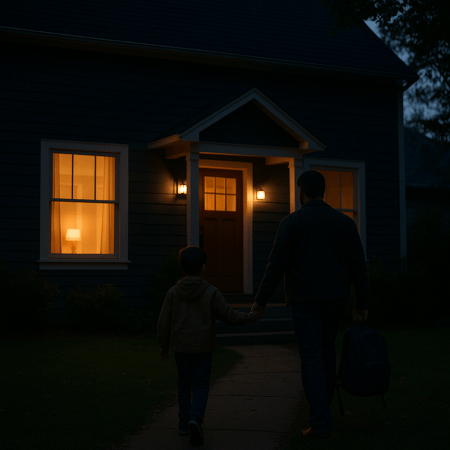
It doesn’t always happen with fanfare. Sometimes it’s just a quiet afternoon, folding laundry or walking through the grocery store, when you catch yourself wondering what it might be like to share these ordinary moments with someone again. For me, it was coming home on a Monday night, after a long day at work, followed by a quick gym workout, then track practice for my son. As I walked up to our house, I thought that it would be nice to be walking into a home now, with someone to greet us, welcome us in, and share our evening with.

I’m not chasing someone to fix my loneliness; I’ve made peace with my own company, and happily like who I am now. But there’s a shift. I want to share my story with someone. Not to be saved. Not to escape. But because growth invites witness, and maybe even partnership.

I’m no longer driven by heartbreak or fear. The old wounds may still ache from time to time, but I’ve stopped bleeding.

I enjoy my own company—but I wonder what it would be like to share my life again. I imagine another adult in the room, not just in the big milestones, but in the quiet in-betweens.

I catch myself daydreaming about connection, not just companionship. I think about emotional safety, real conversation, and mutual curiosity, things that used to feel like luxuries, but now feel foundational to the kind of connection I want to build.


What Being a Parent Changes

Before I had a child, dating was about timing, chemistry, and maybe adventure. Now, it’s about alignment. Whoever I meet doesn’t just enter my life, they step into a world where my child comes first, always.

My time is limited. My energy is sacred. I don’t have the bandwidth to play games or entertain anything half-hearted. Every decision I make filters through the question: Is this person good for both of us?

Any new person has to fit into a life already built around love and responsibility. Not perfectly. Not instantly. But with awareness and respect.

I’m also starting to ask different questions: Can they respect boundaries? Do they understand that some nights are just mac and cheese and bedtime routines? Are they willing to be patient with the pace that parenting sometimes demands?

It’s not about blending families too soon or seeking a co-parent. It’s about making sure that the emotional atmosphere around me is one my child can safely breathe in.


What Readiness Actually Looks Like

Readiness isn’t a feeling. It’s not a sudden surge of confidence or a green light from the universe. It’s a slow, steady shift in how I’m relating to my own story.

I’m willing to be honest about who I am, not just who I want to be. I’m okay saying, “Here are my bruises,” without making someone else responsible for healing them.

I don’t need someone, but I’m open to someone. There’s a difference between hunger and invitation. The first consumes. The second welcomes.

I can hold boundaries and hold space for connection. I know when to say, “This doesn’t work for me,” and when to say, “Let’s figure it out together.”

I’m able to receive interest without immediately making it a future. I let it be what it is, in the moment.


Fears That Still Come Up

Even when you’re ready, fear tags along. And honestly? That’s probably a good thing. Fear is a reminder that this matters. That you’re putting your heart back in motion and leaving it, and yourself vulnerable.

What if I get it wrong again? I might. We all do. The question is whether I learn, whether I listen, and whether I take responsibility. And now, I’m ready to do all that.

What if I hurt someone—or worse, bring the wrong energy into my child’s life? That fear sharpens my discernment. It slows my steps and helps protect my peace and my son’s. I know I can’t eliminate all the risks (that’s part of being human), but I can stay aware. I can catch myself when I’m triggered, own my reactions, and take responsibility. And I can try to recognize when the other person is being triggered by something that isn’t mine to fix but still deserves compassion.

I’m going to start small. Stay honest. And let someone earn my vulnerability.

If you have them, these fears don’t mean you’re not ready. They mean you care.


Why It’s Still Worth It

Because even after loss, love remains possible. And not just romantic love, but shared understanding, growth, laughter, intimacy. Connection reminds us that we’re still here. Still growing. Still worthy of being seen.

Because my child deserves to see what a healthy connection looks like. Not perfection. Just care. Respect. Communication. Kids learn what love is not by what you tell them, but by what you model.

Because growth doesn’t end when a relationship does, and neither does hope. There is no final version of me. My life is constantly in edit mode. But I have a goal now, one I’m still creating. Still reaching for.

I’m still healing. And that healing deserves company, if and when it feels right.


A Promise to Myself (and Anyone I Might Meet)

I won’t rush. Real connection takes time. And it’s worth the wait.

I won’t pretend. I want to be known as I am, not as an idea, not as a fixer-upper, not as a fantasy.

I won’t use anyone to fill a gap that’s mine to heal. My loneliness is my responsibility. My wholeness, too.

And I won’t write about anyone new in my life without their permission—this blog is about me, not them. These words are mine to own. Their stories belong to them.

If someone chooses to walk beside me, I want it to be because we both feel something real, not because we’re afraid to walk alone.

When Tightening the Reins Backfires – Quick Parenting Tips


Tightening the reins too much can turn a small attitude problem into a power struggle. Here’s how to stay calm, offer choices, and build trust with your kids.


Kids push back harder when they feel powerless. Tightening the reins too much can turn a small attitude problem into a full-on power struggle. Here’s how to stay calm and keep the connection strong:


✅ 1. Pause Before Reacting

Take a breath before laying down a consequence. A calm response works better than a sharp one.


✅ 2. Ask What’s Behind the Attitude

Is your child tired, frustrated, or just needing to feel some control? Figuring this out changes how you respond.


✅ 3. Offer Choices Within Boundaries

Instead of “That’s it, you’re done,” try saying something like:
“Do you need a quick break, or should we wrap this up now? It’s your choice.”

Kids often relax faster when they feel included in the decision.


✅ 4. Let Go of Needing to “Win”

Parenting isn’t about winning every moment—it’s about building trust. The more curious and patient you are, the quicker the attitude melts away.


Parenting isn’t about perfection—it’s about showing up, time and again, and growing right alongside your kids.

Should You Stay Together for the Kids? Why Sometimes the Answer Is No (Part 1)

By A Mindful Dad’s Life

One night, my son’s mother and I got into an argument.

I had always made it a point to protect our son from that kind of conflict. I’d go in late to work or take time off just to ensure we could talk privately about disagreements. I believed, and still do, that children shouldn’t have to carry the emotional weight of their parents’ problems. And I thought his mom and I were on the same page.

But that night, things broke down.

She started venting, then yelling, and I didn’t respond well. It went on for maybe ten minutes. The things she was yelling about weren’t just about me or us. They were about life, stress, frustration, things I couldn’t fix in that moment, but her words always circled back to what I had done wrong. When it finally ended, I went to my son on the couch. He had turned the volume on the TV up high to block us out. I sat next to him for a while, then gently suggested we start getting ready for bed.

After I read him three books, I brought up what happened. Not in detail, just in broad strokes, enough for him to know that it wasn’t his fault. I told him I was sorry he had to hear us argue. And I said something I believe every child needs to hear:

“Most people don’t fight and yell like your mom and I did tonight. Most couples, when they’re in love, are kind to each other, and listen, and treat each other with respect.”

He looked at me, really looked at me, and said:

“Oh thank God. I thought everyone was like this.”

I laughed a little, and then I told him the truth. That when he starts dating, he gets to choose. He can be in a healthy, loving relationship. One that is built on kindness, respect, and compassion.


The Hidden Cost of Staying “For the Kids”

Many parents believe that staying together, no matter how unhappy the relationship has become, is what’s best for their child. It seems selfless. It seems responsible. But science and psychology tell a different story.

What Children See Becomes Their Blueprint for Love

From a psychological perspective, the emotional environment children grow up in forms the foundation for how they understand love, trust, and safety. According to attachment theory, early experiences with caregivers shape not only how children see themselves, but also how they approach relationships for the rest of their lives.

If children grow up witnessing coldness, disrespect, unresolved tension, or constant conflict, they may internalize those dynamics as “normal.” Worse, they might believe that love has to come with pain, yelling, or emotional disconnection.

In contrast, when children see healthy conflict—disagreements handled with respect, boundaries, and mutual understanding—they learn that love can be safe and constructive. Even divorce or separation, when handled with care, can model positive emotional resilience.

The Myth of “Shielding the Kids”

You may think, “We don’t fight in front of them. They’re fine.”

But children are perceptive. They notice when the air is heavy with unspoken resentment. They pick up on the tone, the cold shoulders, the sudden silences. As researcher John Gottman found in his studies of family dynamics, even infants can sense emotional discord in the home.

Children don’t need to witness a screaming match to feel unsafe—they just need to feel the absence of warmth.

What the Research Says

  • A longitudinal study from the University of Notre Dame found that children exposed to regular parental conflict were significantly more likely to suffer from anxiety, depression, and low self-esteem—even into adulthood.
  • In contrast, children from divorced or separated homes fared better when the separation reduced exposure to hostility or emotional dysfunction.
  • According to the Journal of Family Psychology, the quality of the parent-child relationship and the level of inter-parental conflict are far more predictive of child outcomes than whether the parents remain married.

The Cost to Parents—and Their Ability to Parent

Trying to “hold it together” in a toxic or disconnected relationship often leads to burnout, anxiety, or emotional shutdown. You become less present, less patient, less emotionally available.

You may still love your child, but it gets harder to show up for them in the ways they need.

That night, after the argument, I did show up. I held space for my son’s confusion and gave him something he could hold onto—a vision of what love should be.

But that moment also made something clear to me:

If the environment we create is one where our child says, “I thought everyone was like this,” then we’re not doing our job as parents. We’re not protecting their belief in love, or modeling what it means to respect another person—even when things are hard.


Coming in Part 2:

When It’s Time to Leave—and How to Do It Well
We’ll explore:

  • When separation becomes the healthier choice
  • The impact on children from both parents’ perspectives
  • How to co-parent with respect, and model healing instead of harm

You can find Part 2 here.

Roots and Wings: The Greatest Gift We Can Give Our Children

There’s a saying I once wrote in my journal—words that poured out of me one night after a hard parenting day: “The greatest gift I can give my son is both roots and wings.”

It wasn’t until much later I learned that Johann Wolfgang von Goethe had written something nearly identical centuries before:

“There are only two things children should get from their parents: roots and wings.”

And later, Hodding Carter echoed it:

“There are but two lasting bequests we can hope to give our children. One of these is roots, the other, wings.”

I didn’t know that when I wrote it. I had just lived it. And maybe that’s the point. Maybe we all arrive at this truth when we love deeply enough.


Roots

Roots are the foundation. They’re the morning routines, the tucked-in blankets, the bedtime stories we’ve told a hundred times—the castle we storm together, even if I run the wrong way to battle the orcs. They’re the quiet presence we offer when our kids are overwhelmed, or the moments when we choose to be with them fully, no distractions and no excuses. Those moments give them a sense of safety and allow space for big feelings they can’t yet name.

Roots are made of consistency and quiet courage. They are the traditions we build, the values we live, and the love we offer even when our kids push us away. They tell our sons:

“You belong somewhere.”
“You are grounded in something strong.”

For me, roots mean teaching my son how to calm down, how to brush his teeth, how to be kind even when he’s frustrated. It means showing up when it’s hard. It means listening, even when I’d rather walk away.
It means creating a safe place to return to, even after he’s yelled, melted down, or lost control.


Wings

Wings are the courage to let go. They’re the freedom we allow our sons to discover who they are, without shaping them into who we hoped they’d become.

Wings are in every “You’ve got this.”
Every “Go try.”
Every moment when we step back and let them rise or fall on their own.

Giving my son wings means not rescuing him from every hard moment. It means trusting that he’ll grow through the discomfort. That he doesn’t need me to be perfect, he needs me to believe in him.

Wings whisper:

“I trust you.”
“You are allowed to become.”

“You can Trust Yourself.”


The Balance

This is the hard part.
Too many roots, and we raise a child afraid to move.
Too many wings, and they might never know how to land.

But when we give both, real roots and strong wings, we raise boys who are grounded and free. Boys who become men with a deep sense of self—rooted in love, truth, and purpose—and a brave heart ready to face the world with kindness, curiosity, and strength.


For my son

If I can give you anything, my son, it will be this:
A sense that you are loved and safe, even when the world is not.
And the freedom to discover your voice, your values, and your wild, wonderful path.

These are your roots. These are your wings.
And I will be here, on the ground, cheering as you rise.

Welcome to Mindful Dad Life

Why I Started This Blog — and What It Means to Me

I didn’t plan to start a blog.
Not because I didn’t have anything to say, but because I was too busy trying to be the dad I wish I’d had.

Being a parent changes you. Sometimes gently, sometimes like a storm.
And in the middle of it — work, bills, questions you can’t answer — I realized I wanted to do more than just get through fatherhood. I wanted to be present for it.

That’s where Mindful Dad Life comes in.


This Blog Is a Place for Me to Be Real

I’m not here to pretend I’ve got it all figured out.
There are days I get it wrong.
Days I react too quickly.
Days I forget that being “strong” isn’t the same as being connected.

And nights when I say I’m sorry, I messed up.

But I’m learning. And that’s what this blog is about.


What You’ll Find Here

This is a place for:

  • Stories about raising a son who listens to his own heart and learns to act with compassion, courage, and kindness
  • Reflections on what I’m learning as a dad and man
  • Ideas for making memories — especially when time is short
  • Reminders that being present matters more than being perfect

Whether it’s a weekend adventure, an emotional moment we worked through, or a thought I needed to write down — you’ll find it here.


Why I’m Sharing This Publicly

Because being a dad can feel isolating, even when you’re surrounded by all the noise.

If any part of my experience helps another father feel seen, heard, and maybe even just a little appreciated, or gives someone a little guidance to someone walking a similar path, then this is worth it.

This isn’t about going viral.
It’s about being real, being honest, and being here.


Let’s Learn This Together

You don’t have to be perfect to be a great dad.
You just have to show up — consistently, imperfectly, wholeheartedly.

So here I am. Showing up.

Welcome to Mindful Dad Life.
I’m glad you’re here.